
Applications Now Open for Our 2026 Art in the Park Grant Awards!
Now in its seventh year, the Art in the Parks: Alliance for Flushing Meadows Corona Park Grant supports the creation of two site-responsive artworks by New York City-based artists for designated locations within Flushing Meadows Corona Park that would benefit from more cultural programming. The grant will help transform these sites into art destinations through a series of rotating exhibitions, with supporting events and programs. Generously funded by the Alliance, each grantee will receive an award of $10,000 to create their proposed artwork.
This grant will help bring attention and visitors to areas outside of the “core” of the park (including the Unisphere perimeter). Artists are strongly encouraged to visit these areas of Flushing Meadows Corona Park before submitting a proposal.
One artist will present their work at David Dinkins Circle, and one artist will present their artwork in Flushing Meadows Corona Park in one of the possible following locations:
Meridian Road and Meadow Lake Road - West Entrance
Roosevelt Avenue Entrance
111th Street at 49th Avenue Entrance
111th Street at 55th Avenue Entrance
College Point Boulevard and 58th Road Entrance
Corona Avenue and Horace Harding Expressway Entrance
Lawns around Meadow Lake
Additional locations may be considered if justified in the artist’s application.
Timeline:
Sunday, April 5, 2026: Proposal deadline
May 2026: Award recipients announced
October 2026: Artworks installed in parks
Review the full application guidelines and grant award details at this link.
Learn more Dakota Gearhart and the Queens Lighting Collective, our 2025 Art in the Parks awardees:
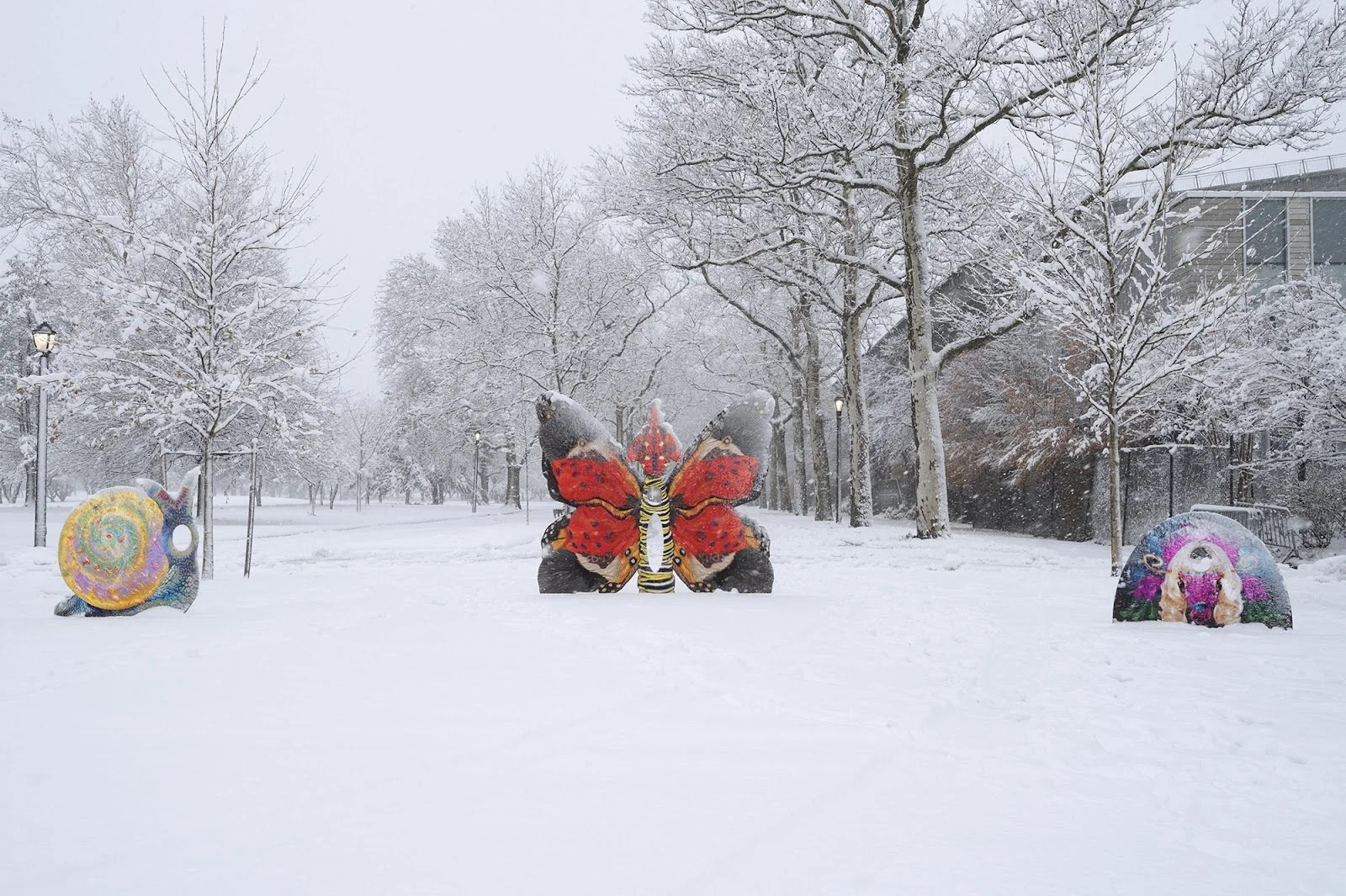
Visitors Emerging from an Inconveniently Placed Portal
Dakota Gearhart will create a large-scale aluminum photo sculpture celebrating the so-called pests of Queens—those insects we often consider acceptable to exterminate in our homes and gardens. The sculpture will feature five enlarged images of bugs commonly found in Queens, some more recognizable than others. Each insect will be adorned with a party hat and include a cutout where humans (or dogs) can insert their heads, creating a playful photo opportunity. This whimsical setup produces an optical illusion that invites participants to “cosplay” as the insects, playfully reversing roles. Beneath the humor, however, lies a deeper intention: Gearhart uses anthropomorphism as a tool to reframe our perceptions of these typically unwanted creatures, suggesting that even the least loved forms of life are worthy of existence on Earth. By throwing a symbolic "party" for these bugs, Gearhart aims to evoke laughter, wonder, and curiosity around subjects that often provoke discomfort or fear. Additionally, the sculpture will incorporate augmented reality features, offering interactive links to media pieces that share information about each specific insect.
Artist: Dakota Gearhart
Orogeny
“This is a valley of ashes—a fantastic farm where ashes grow like wheat into ridges and hills and grotesque gardens, where ashes take the forms of houses and chimneys and rising smoke.” - F. Scott Fitzgerald The Great Gatsby
o·rog·e·ny
/ôˈräj(ə)nē/ Noun. Geology.
a process in which a section of the earth's crust is folded and deformed by lateral compression to form a mountain range. "present rates of denudation and orogeny”
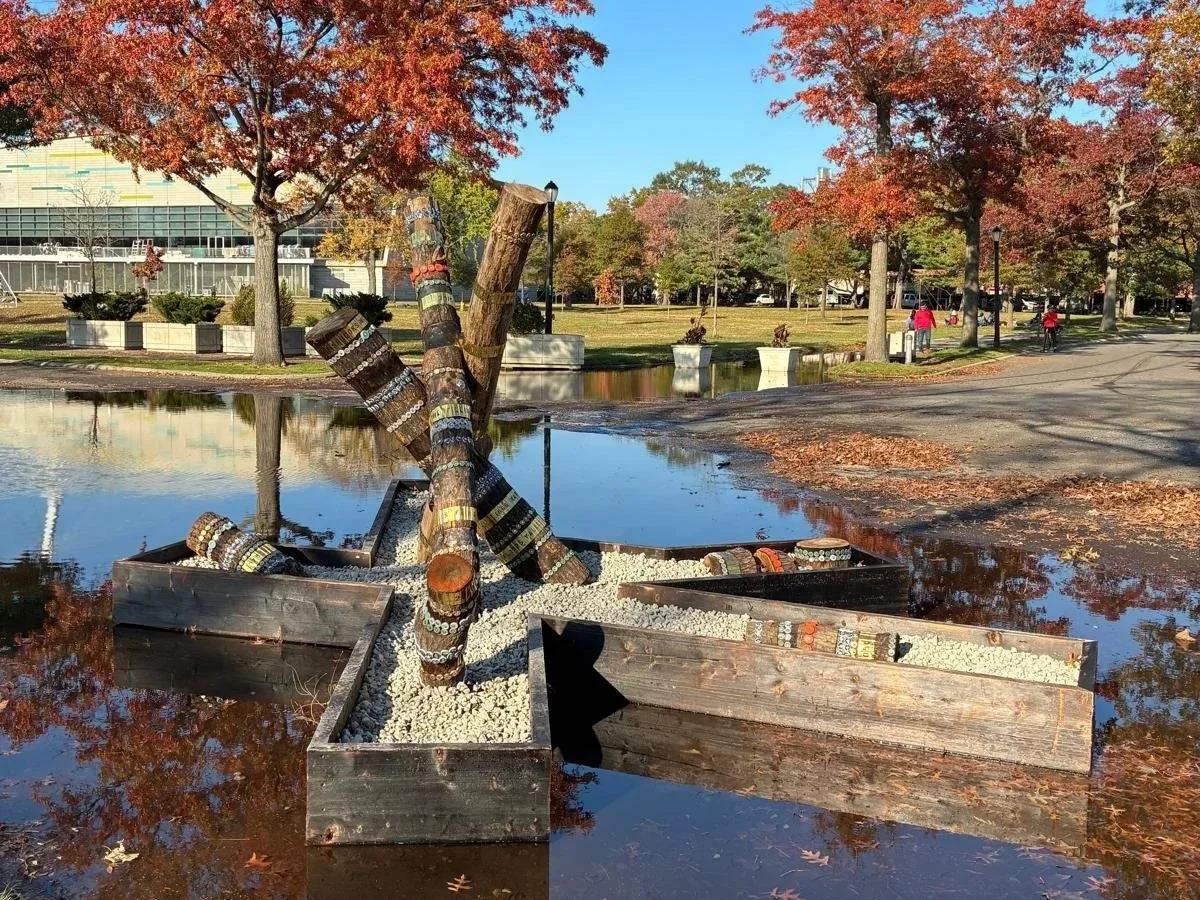
Flushing Meadows Park has come a long way since its days as the Corona Ash Heap - no longer the “certain desolate area” vividly described in The Great Gatsby, it is a truly multipurpose crossroads serving the most diverse population of a bubbling borough. When one looks at a map of the park today, the variety of usage is graphically clear before you ever step foot on the grass. Roads, footpaths, museums, theaters, playgrounds, sporting fields, lakes, architectural relics, a subway station, a stadium, the occasional art installation - and that is just considering it in the immediate now. We wanted to graphically explore the history of the land, and the accumulations and erosions of its character over time. We have drawn inspiration from historical maps of the area (horizontal) and the aesthetics of geological core samples (vertical). Water (Meadow Lake, Flushing Creek) and ash (the Corona Ash Heap) both have tidal qualities of movement, buffeted by wind, gravity, and humans. We are interested in the history of continuous change in the Park, marked by moments of perceived permanence (the Worlds’ Fair, the next Worlds’ Fair, the parking lot, the potential casino) that inevitably gave way to evolution. Change is constant, but everything that passes through leaves a mark.
Putting these impulses into our furnace, we have emerged with an assemblage of core samples, extracted from history into the light of the present. Our geological layers will reflect the past identities of the land we now know as the Park, translucent and refractive materials to converse with the natural and human light of the present. In practical terms, we plan to create an orogeny of cores, centered around a trio collapsed against each other, and surrounded by the “breakages” of that collapse.
Artist: Queens Lighting Collective
Scroll down to learn more about prior grant winners and their installations:
Gallery of Past Art in the Parks Sculptures in Flushing Meadows Corona Park:
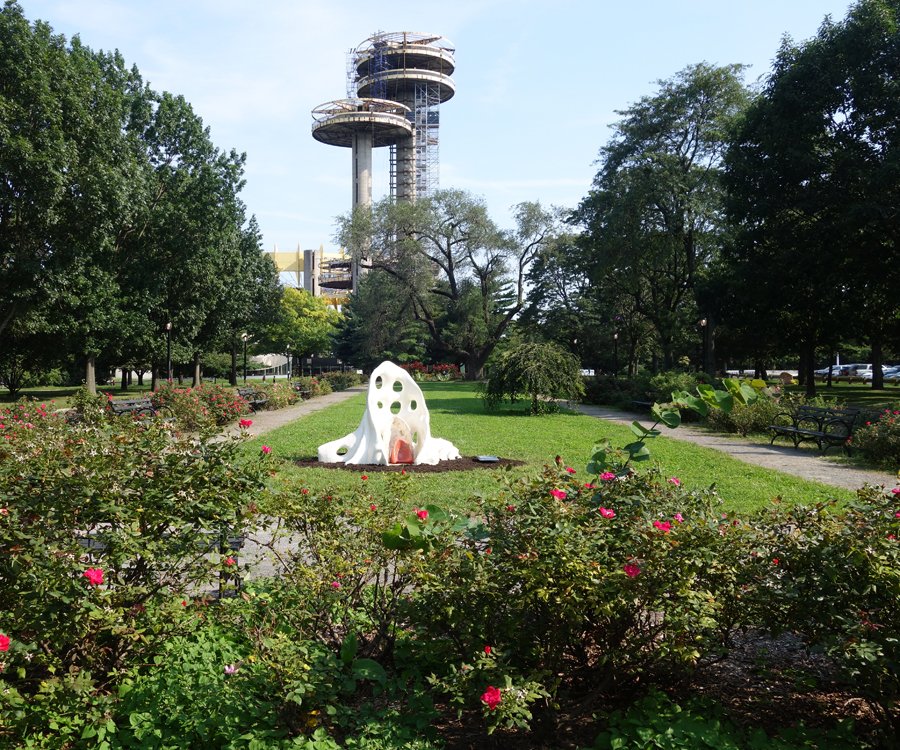
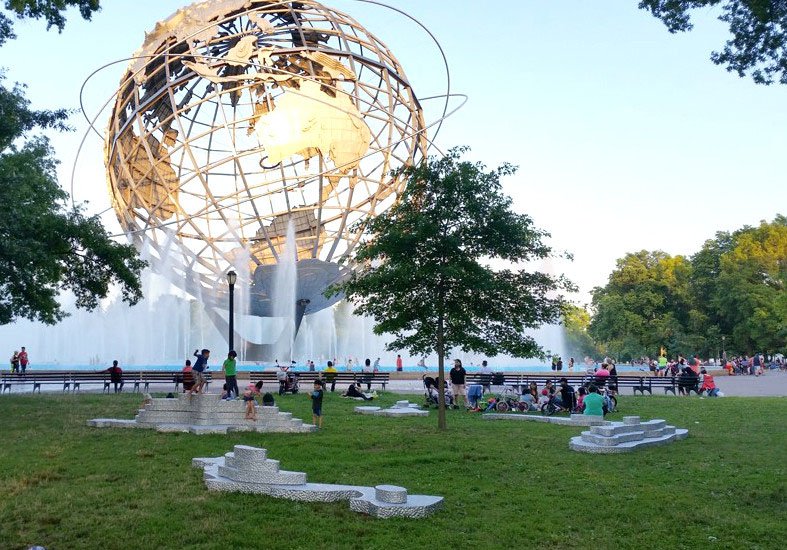
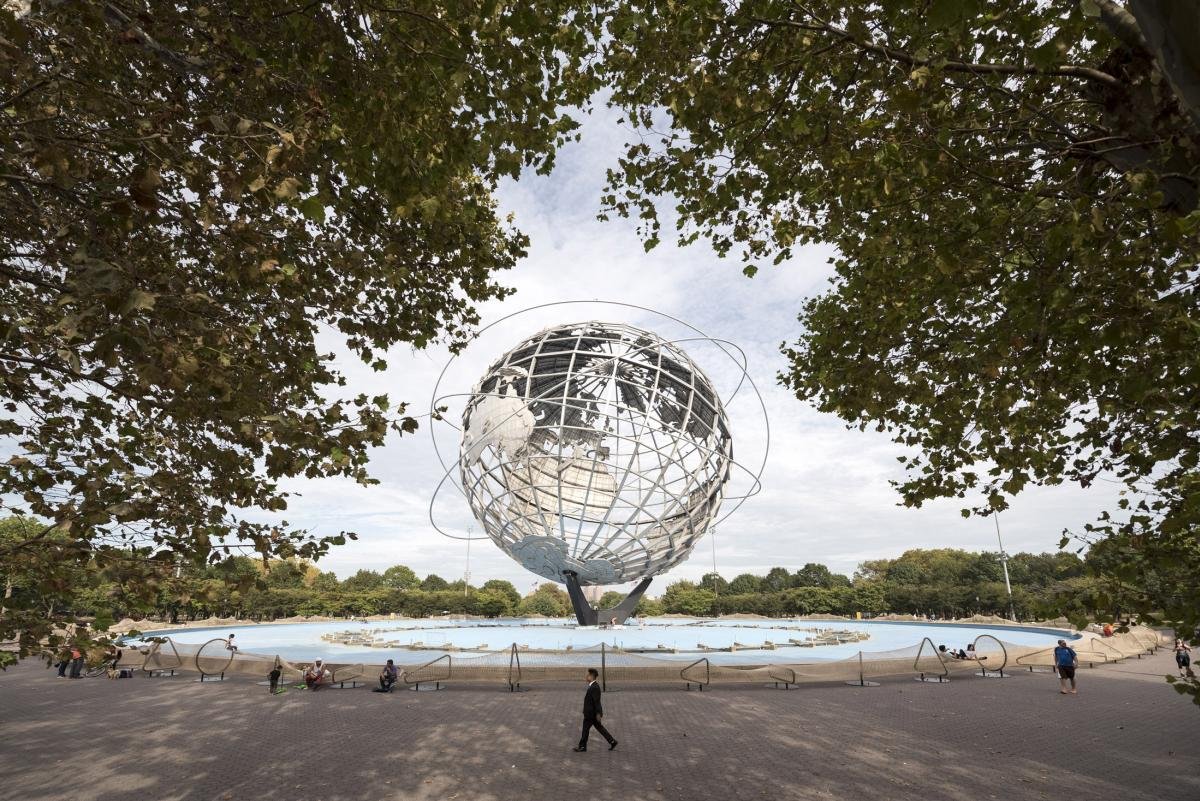
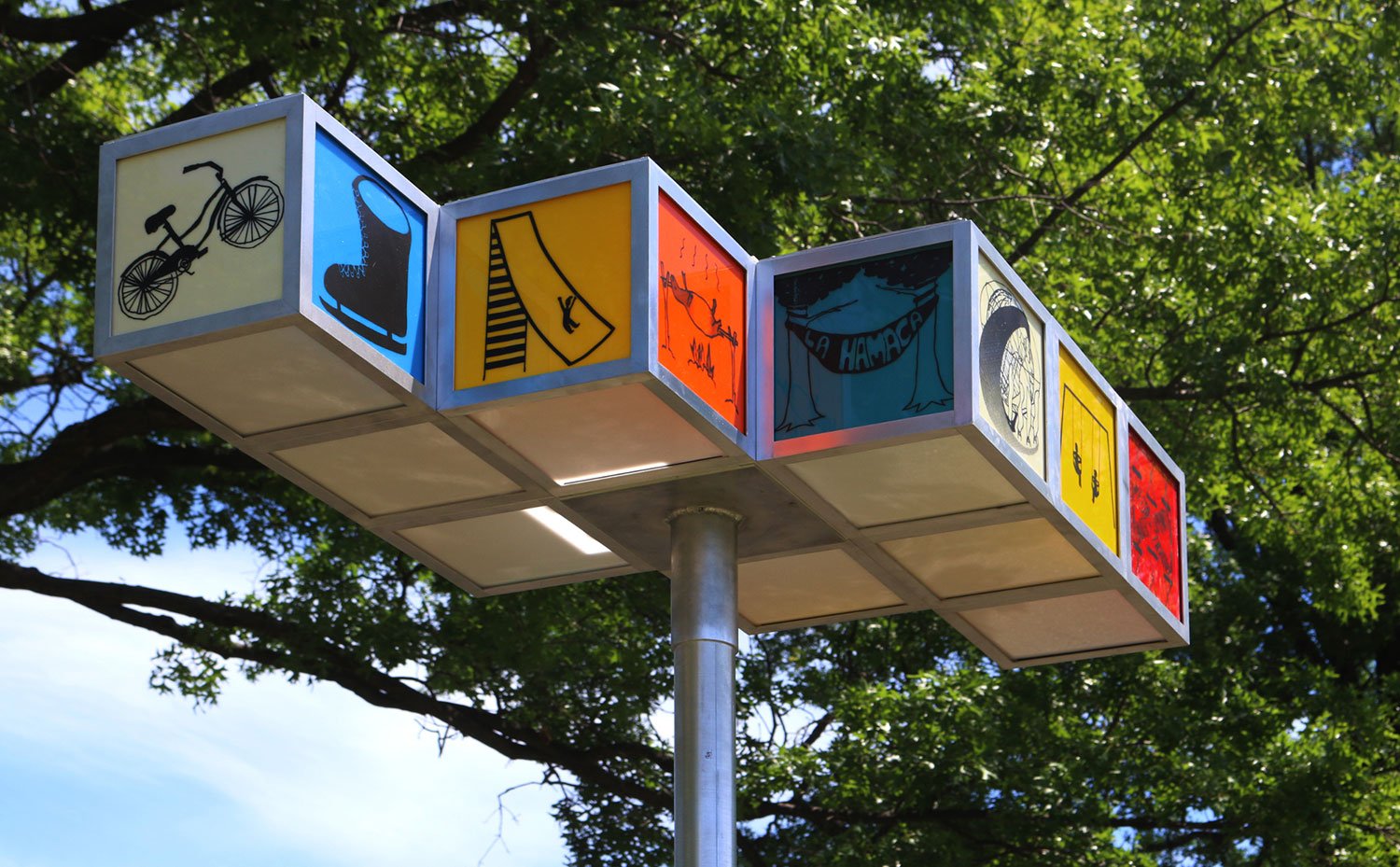
Prior Granted Artists/Works
2024-2025:
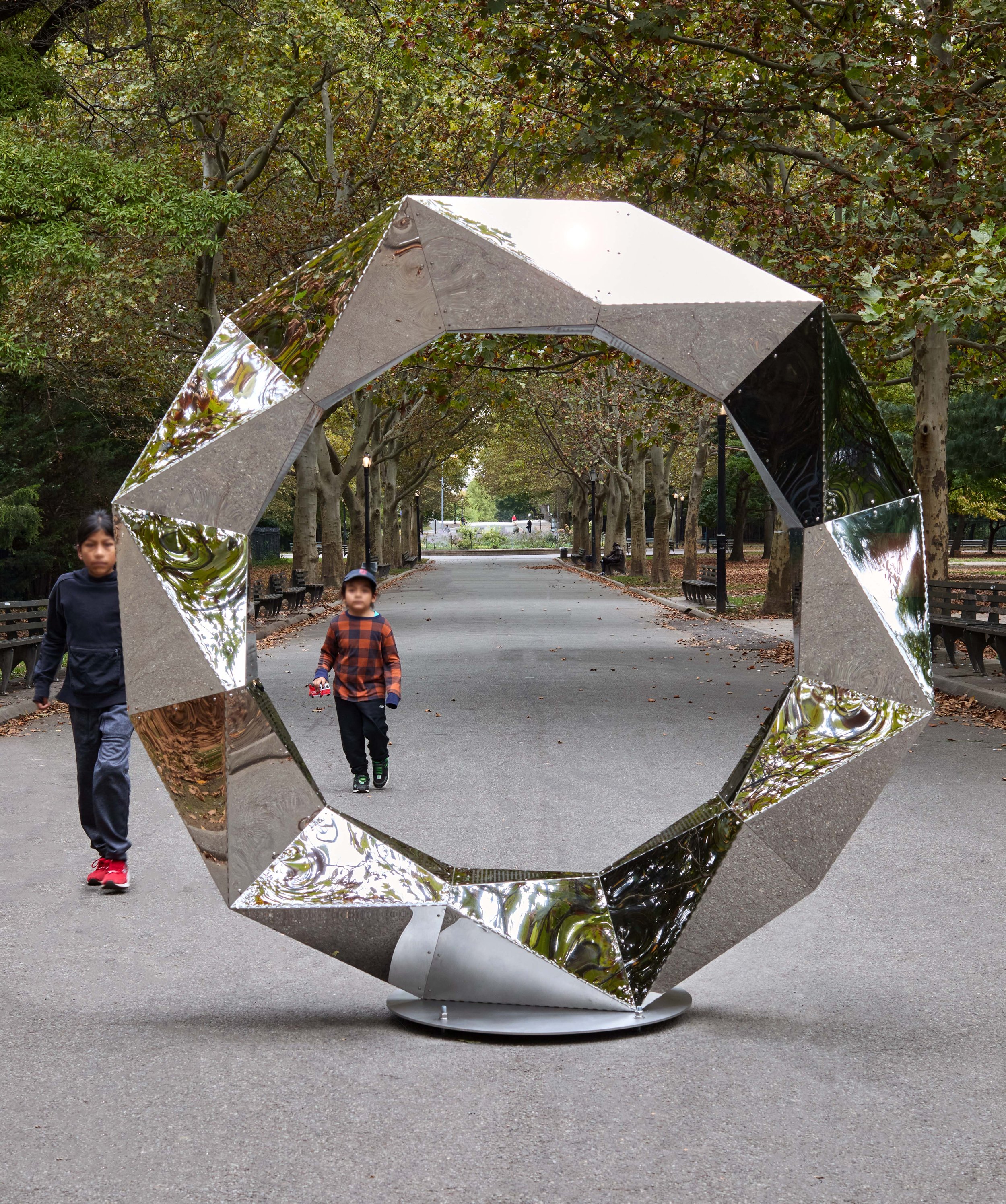
Drew Seskunas for What is the Opposite of a Black Hole?, re-imagines its opposite as something that radiates light and spreads knowledge. The sculpture pays tribute to Queens’ deep scientific legacy, honoring the Queens-born scientists who expanded our understanding of the universe and illuminated some of its most significant questions.
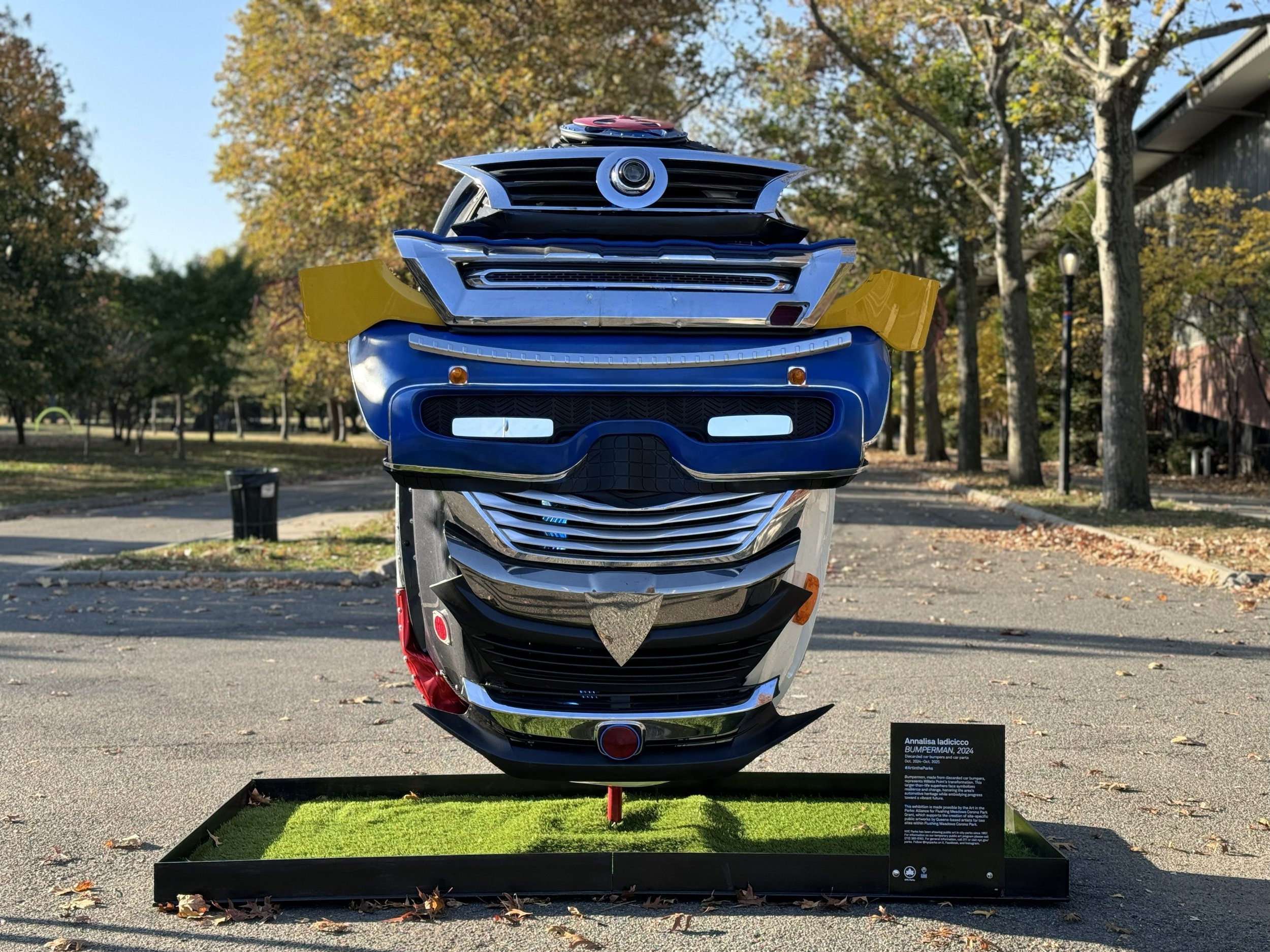
Annalisa Iadicicco for Bumperman, a tribute to the resilient immigrant community of Willets Point, Bumperman - a life-sized superhero sculpture crafted from recycled car bumpers and auto parts - stands tall as a symbol of renewal. This striking figure celebrates the area's vibrant history as a hub for affordable auto repairs, while honoring its ongoing transformation into a mixed-use community.
2023-2024:
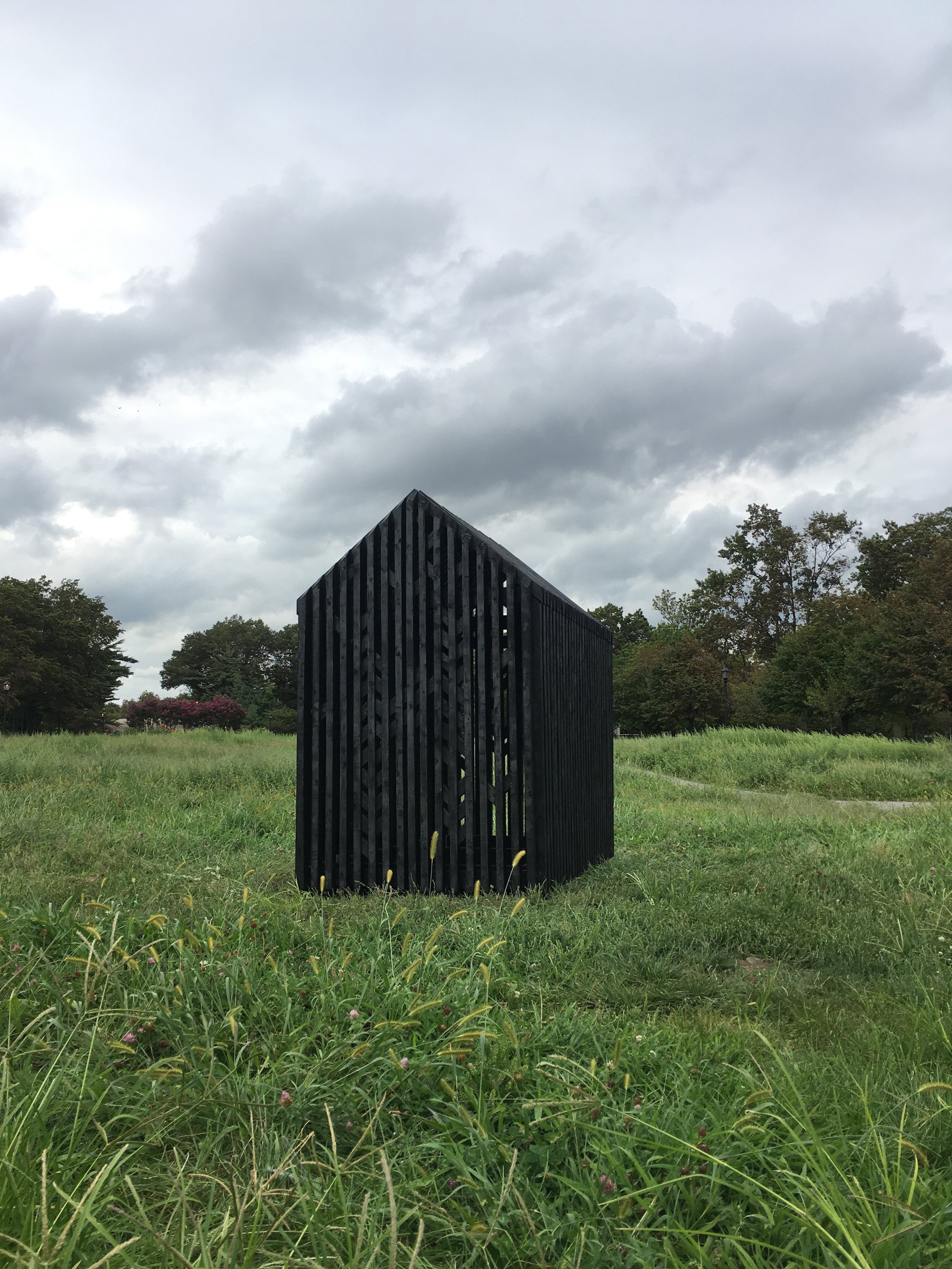
Julia Sinelnikova for Light Portal, a multimedia installation that reinterprets Philip Johnson’s Tent of Tomorrow and its Russian antecedent, the Shukhov Rotunda, into a contemporary structure that uses solar panels to encapsulate a sense of the diversity of current-day Queens.
Kisha Bari and Jasmin Chang for Hey Neighbor NYC, an ethnographic snapshot of New York City that highlights ‘Connectors’ from around the city who were chosen by their communities as people who break down the walls separating us.
2021-2022:
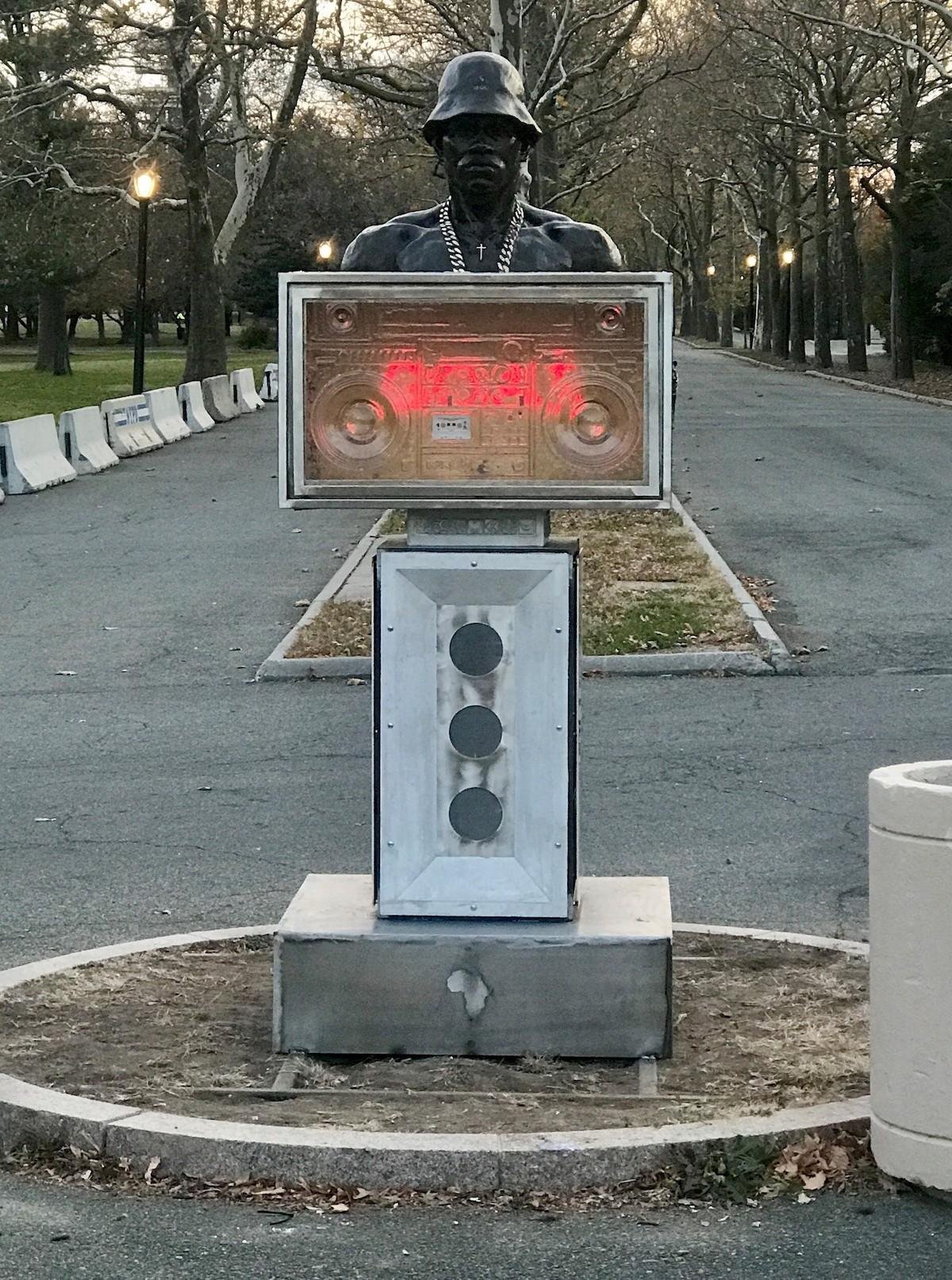
Sherwin Banfield for Going Back to The Meadows: A Tribute to Queens Hip Hop Legend LL Cool J and Performance at FMCP, an eight-foot-high bronze sculpture of the Queens-born Hip Hop legend placed on a digital music platform.
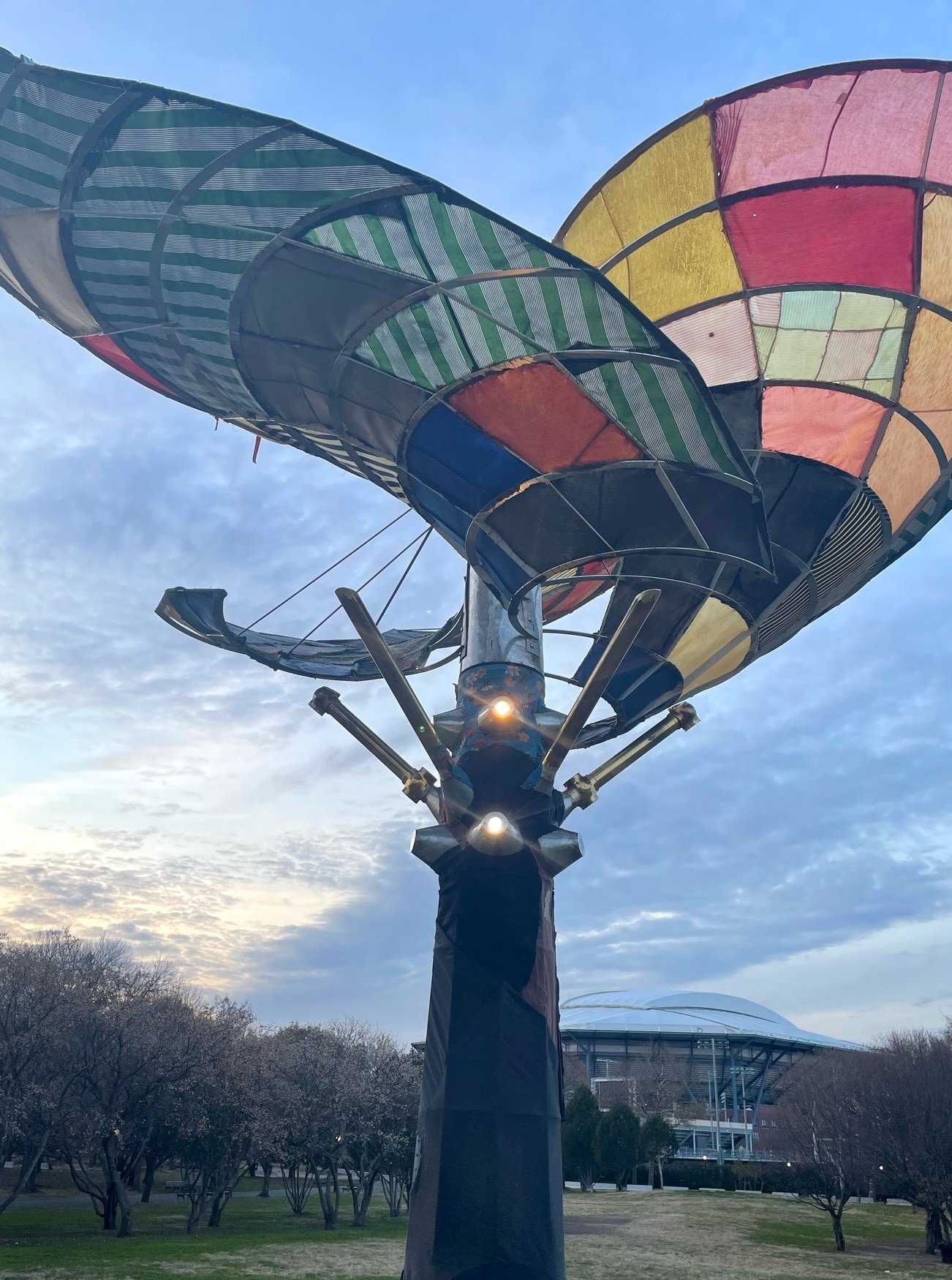
Haksul Lee for The Giving Tree, a sculpture made of recycled materials and a wind turbine to honor and bring awareness to environmental concerns in the Queens community.
2020-2021:
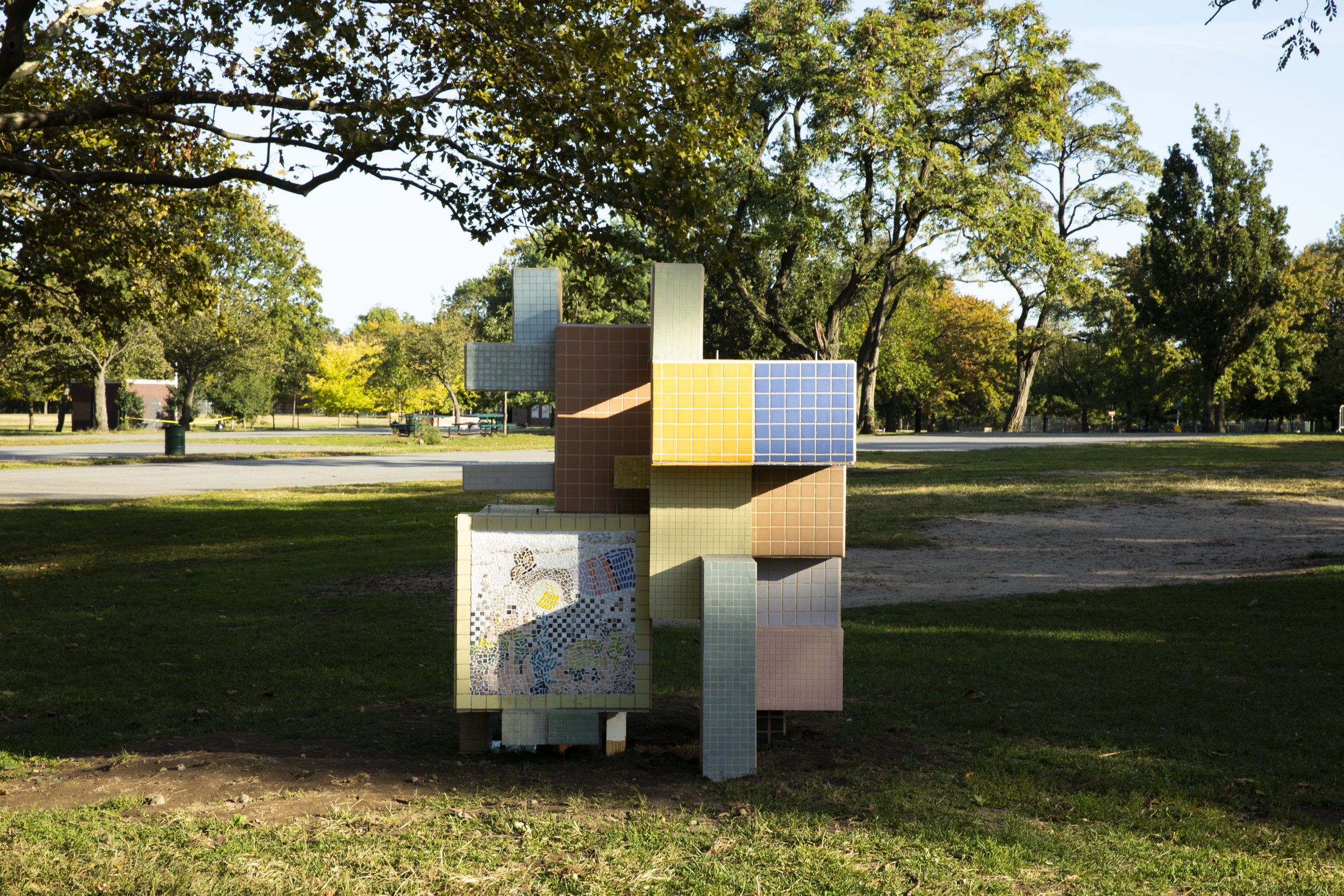
Laura Lappi for 7 x 7 (HOPE), which explored the issues of space and the cost of housing in New York City.
Jeannine Han/Dan Riley for Another Way It Could Go, which celebrated connections between local and universal communities.
2019-2020:
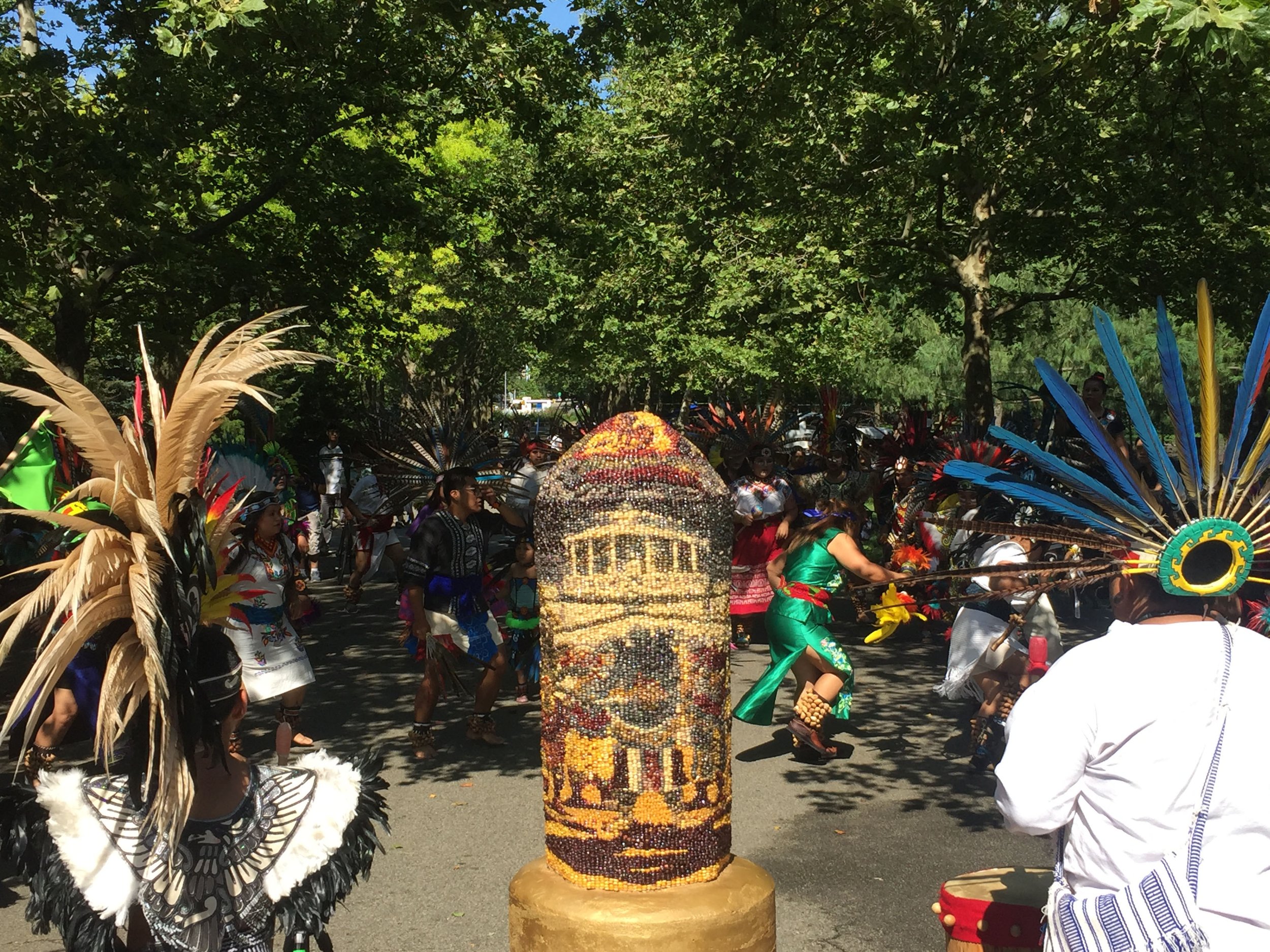
Karl Orozco for Hospicio Cabanas (Playable Stage for Thunder Hawk), which interpreted Mexican archetypes, traditional drama, and tech into art and performance.
Yvonne Shortt with Joel Esqute and Mayuko Fujino for Pavilion Landing, a playful sculpture inspired by the 1964/’65 World’s Fair which occurred in the park.
About Art in the Parks
Since 1967, NYC Parks’ Art in the Parks Program has consistently fostered the creation and installation of temporary public art in parks throughout the five boroughs. For more information, please visit www.nycgovparks.org/art-and-antiquities/art-in-the-parks